miércoles, 11 de febrero de 2015

Los Reyes Católicos y su conquista sobre los musulmanes en España

El 30 de enero, los otros estudiantes y yo fuimos a Granada por el fin de la semana. Granada está en las montañas en el sur de España, y la ciudad es preciosa. El viernes, fuimos a la Alhambra, que fue hecho en 889 por los musulmanes. La fortificación del edificio es impresionante y el castillo es grandísimo.


La madura de los cielos es la misma madura que fue utilizada hace cientos de años pasados para construir el techo. Fueron hecho de cedro, y las termitas no les gustan a cedro, entonces esta no era un problema. Además, los musulmanes usaron yeso y azulejos para hacer un edificio guapísimo.


Lo que me parece es el más precioso de todo este castillo es la incorporación del agua en TODO el edificio. Desde que los musulmanes eran de África y no tenían mucho agua, se adoraban al agua. Hay fuentes y piscinas por todos partes del castillo, y son naturales y usan a la gravedad para funcionar. ¡Incluso algunos de sus fuentes de agua están diseñados para parecerse conchas! ¡Qué impresionante!


Los sultanes podrían tener a lo máximo cuatro esposas a un tiempo, pero podrían divorciarlas y casar con otras. Por eso, unos sultanes tenían 400 esposas durante su regla. Piensa en tener 400 mujeres chismosas; ¡obviamente este está donde el machismo se perfeccionó!
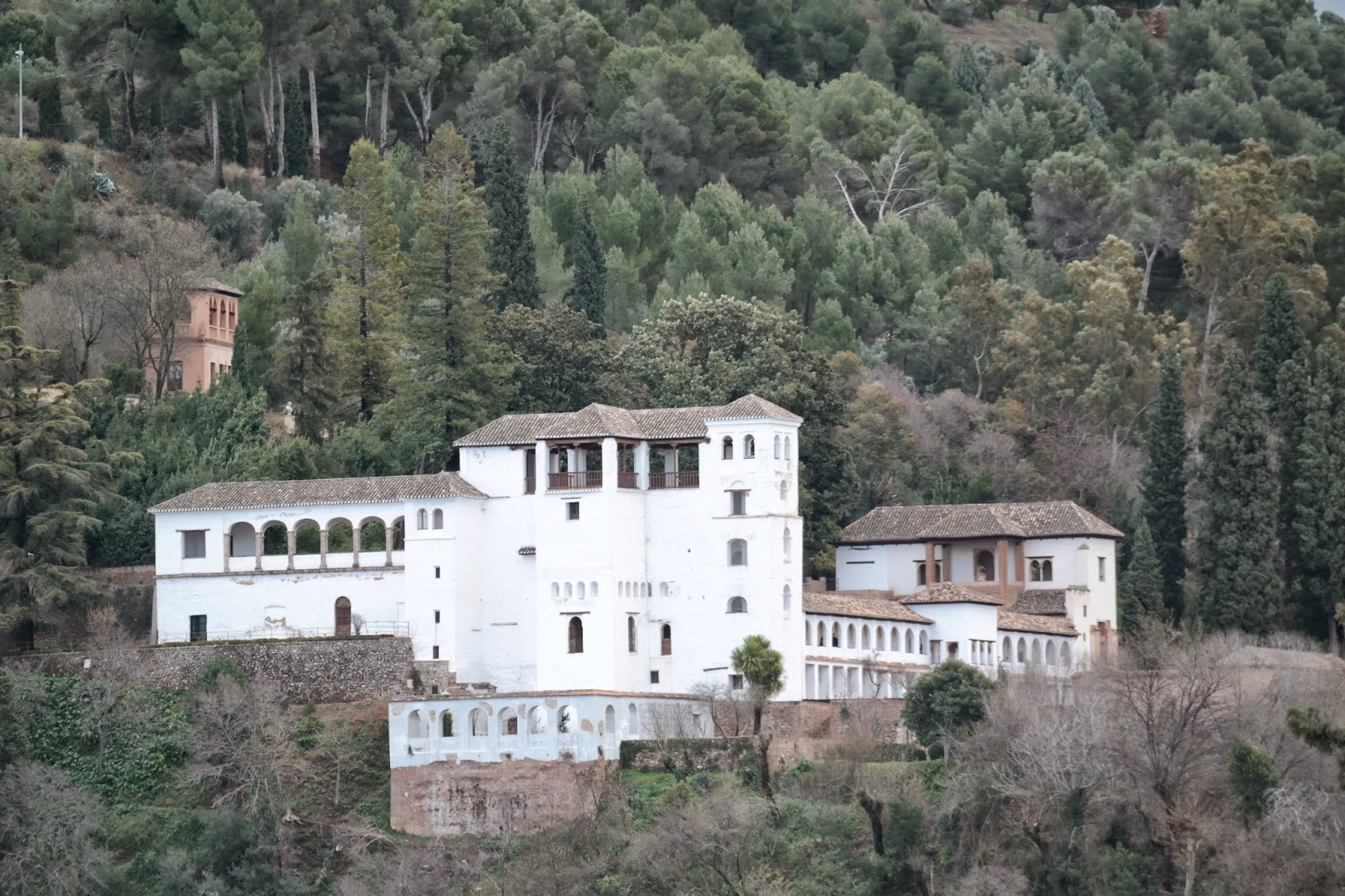


Fuera del castillo hay el Palacio de Generalife donde los sultanes podrían escapar a para relajarse por el día, ¡que fue probablemente una ocurrencia regular con todas sus esposas! Arriba de Generalife, había tierra para cazar, que era un pasatiempo muy popular.


Nuestra guía, Cristina, era muy inteligente y sabía mucha de la historia del castillo. Ella nos dije que en 1492, los cristianos conquistaron a Granada y la Alhambra, y hay un rumor que Ferdinand e Isabel dieron a Cristóbal Colón el permiso para ir a las Américas de un cuarto en la Alhambra.
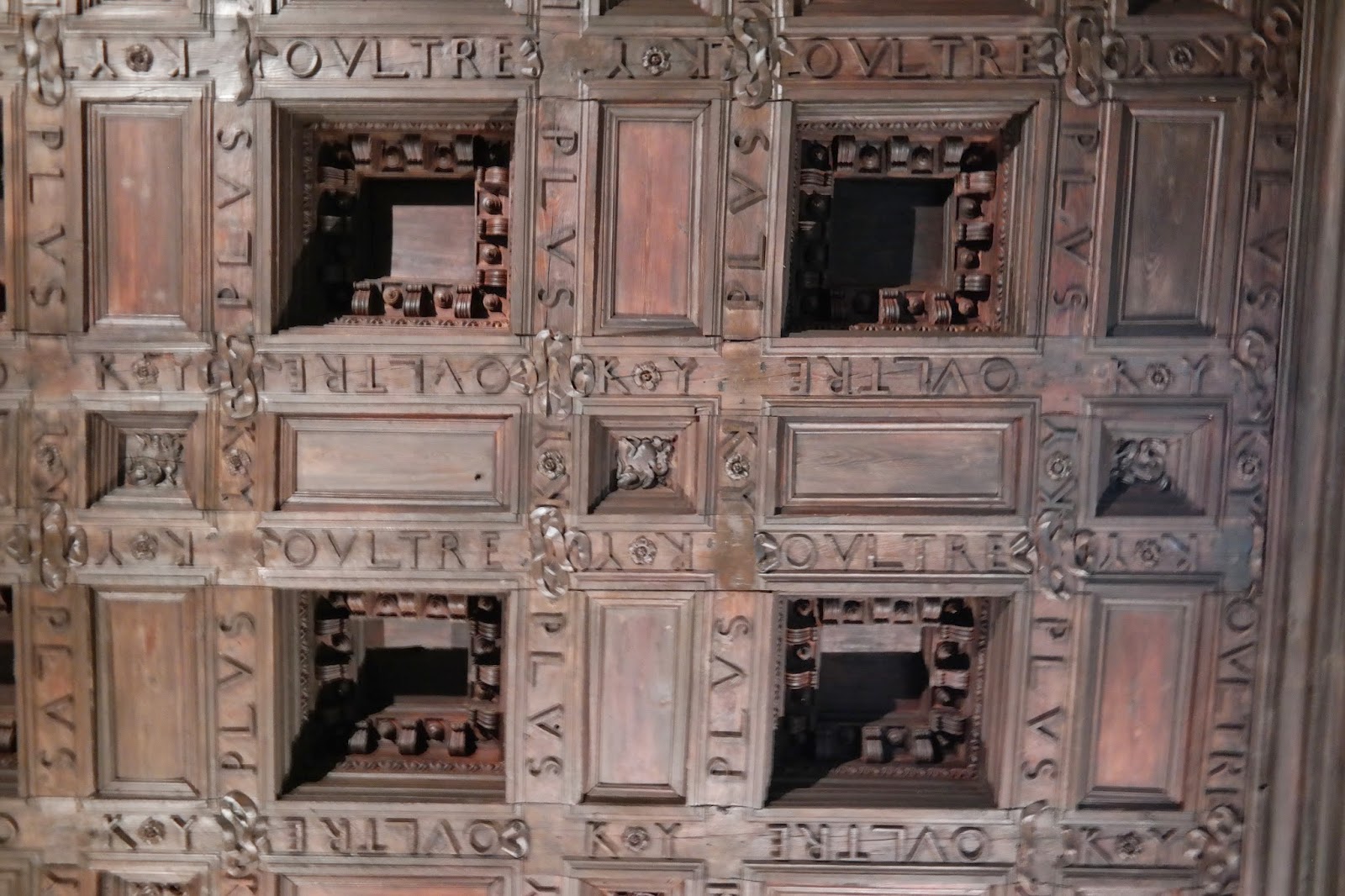


Después, cuando los cristianos lo conquistaron, ellos también hicieron unos edificios, pero su arquitectura es un poco diferente. Por ejemplo, ellos usaron a latín en vez de airaba. También, los cristianos derribaron la mezquita y construyeron una iglesia en la misma locación de la mezquita para representar su dominación de los musulmanes. Realmente, es una lástima porque la mezquita probablemente era preciosa, si era algo como el resto del complejo.


Algo increíble es que Emperador Carlos V quería hacer Granada la capital de España, y empezó a hacer un edificio muy bonito en Alhambra ser el Palacio Royal. Antes de que podría terminarlo, se murió, y el próximo emperador, su hijo, Felipe II, decidió que quería hacer Madrid la capital debido a su ubicación central, y porque de eso, hoy Madrid es la capital de España. No fue sino hasta aproximadamente 45 años pasados que se agregaron un techo al edificio y se convirtieron el edificio en un edificio histórico para el turismo.


El sábado, andamos por la ciudad. Subimos mucho a encontrar a una visa preciosa de la ciudad y la Alhambra. En ruta, pasemos por Calle de los Tristes, que fue la calle para las procesiones de los funerales y está al lado de Río Genil.


Yo vi alguno grafiti por el lado de un edificio que dice “Revolución solo es hacer lo que tú sientes,” que creo es una frase muy perspicaz.


También, yo vi a un hombre hecho de madera que pienso es probablemente Pinocho después de que él creció. ¿Pensamientos?

Algo raro es que muchos gitanos viven en Granada y se venden cosas como paraguas por los calles. Ellos viven en cuevas por los lados de las montañas.


Fuimos a la Capilla Real de Granada, que es una iglesia grande y bella. Lo que es más interesante de esta iglesia es que es donde los cuerpos de Ferdinand e Isabel están, y se puede ver a sus ataúdes. El sentimiento en la iglesia era una sensación que no se puede describir con las palabras.


Por la tarde, tapeamos y bebimos mucho vino. ¡Qué diVINO era! Por la noche, fuimos a una discoteca muy alta en la ciudad que tiene una vista increíble de la Alhambra. En la discoteca, hay unas cuevas, como las unas donde viven los gitanos. Domingo, regresemos a Sevilla, y, lo que era una lástima era que fue el día solo sin lluvia. Claro, ¿verdad?

Por lo largo, era un viaje muy divertido y educacional.

miércoles, 28 de enero de 2015

El desayuno

Spanish breakfast menus are pretty complex, so I figured I could give you all the low-down. For food options, we have toast with butter, toast with jelly, or toast with olive oil. You could probably get just plain bread instead of toast, but I haven’t ventured that far into the menu…yet. I only just found out that the metal canister my Señora puts on the table every morning is olive oil, so I’ll have to venture into that soon!


For drinks, water, coffee, hot milk, or hot milk with ColaCao are your options. I’ve heard that in some houses juice is also an option, specifically orange juice, but I haven’t seen it on the table at la Casa de Chari…


And that’s about it. Every day. You may think I’m kidding, but I’m 100% serious. If you’re a carb-o-holic, you’ll love it. If you’re a friend of Atkins, HAH! Good luck. I tried tracking down some peanut butter for my toast, but that’s not sold in Europe, I hear… ¡Qué raro! I broke down and bought some Nutella, which is something I have avoided all my 23.5 years… Honestly, I’m not impressed. Maybe it’s been hyped up by so many people that I figured it’d be better? Either way, it is way too sweet to eat more than a little bit of it without getting overwhelmed, in my opinion. Maybe it’ll grow on me?

There is a dish called Tortilla Española that Spaniards love that’s kind of like hash browns, but that’s ate for lunch or dinner, not for breakfast. No eggs. No sausage. No bacon. I repeat, NO BACON. No pancakes or waffles. No cereal. Ironically, Spaniards LOOOOVE their toast and it never gets old do them. Ever. They eat it 7 days a week, 365 days a year. (366 days on leap years!)

Actually though, I’ve grown accustomed to it and it’s grown on me already, but you bet’cha I’ll be enjoying scrambled eggs, hash browns, sausage, bacon, waffles, pancakes, chocolate milk, breakfast sandwiches, and anything else I may be forgetting in my first weeks back in the States!


Until then, ¡VIVA PAN TOSTADA!

martes, 27 de enero de 2015

Mi casa es su casa

I figured, now that I’ve been living here a couple weeks, y’all are on the edge of your feet to hear about where I live, and what a Spanish home is like. In the city, like in America, a lot of Spaniards live in apartments due to the dense population. However, you’d be hard pressed to find a Señora’s house that’s not spotless! Due to small space, they don’t accumulate a lot, so that probably makes it a little bit easier. My home is on the northeast side of Seville, close to the Santa Justa train station. We live on the sixth floor of a seven story building. There are a couple elevators in the building, but they comfortably fit 2 people in them, and I didn’t even realize it was an elevator, so my first day here, I definitely climbed all six flights of stairs with my stuff!

When approaching the front door, you can see that the door handle is in the middle of the door. It’s more for show, really, because you don’t turn it to open the door. The door locks automatically each time, so you have to use your keys to get in each time. (There’s a key to get into the courtyard and building too, which gets locked in the evenings.) There’s a small foyer when you enter, which has doors to enter into the living room and a hallway. Down the hallway, there’s a kitchen, bathroom, and three bedrooms.


The living room has a couch and love seat with a tall coffee table, a dining table, tv, birdcage, and a door into a storage room. The coffee table has a floor length cover on it and a heater underneath. Since we’re in southern Spain and the coldest it usually gets is low 40s, most houses don’t have heaters, so when it’s cold, they turn the heater on and pull the cover up over their legs. It’s actually extremely comfortable; it’s like sitting in a hot tub: your lower half is very warm and your upper half is slightly chilly. The love seat easily slides over so everyone can enjoy the heat and see the tv. We also pull over chairs from the dining table and eat with our legs under the table in the heat. Chari, my Señora, likes to enjoy the heat and watch telenovelas (soap operas), las noticias (news), or películas (movies), which are often American movies that are dubbed with Spanish in place of English. (Personally, I don’t like that style because it drives me crazy that the lips don’t match up with the words!) 


There’s also a bird cage with three birds. The primarily gray one is male, the gray and yellow one is female, and the yellow one is actually their daughter. I’m guessing they’ll probably have another child down the road because they practice making babies a few times a day… The daughter likes to chirp a lot, and Chari says it’s because she’s lonely and needs a mate. I can understand, especially since she watches her parents…


The storage room isn’t anything special. Just a place to store extra possessions and our empty luggage!


The kitchen is petite and only has a fridge, sink, stove/oven, and microwave. The washer for clothes is also in the kitchen, though it’s much smaller than American washers. There isn’t a dryer; all clothes are dried on lines on the roof! The kitchen is a Señora’s haven and that’s where the magic happens!


The bathroom is also small, like everything here, and has enough room for a toilet, tub/shower, sink, and bidet; I have no idea how that works though. Victor, our Señora’s grandson, says he only uses theirs to wash his feet after he’s been to the beach, etc. Seems like a waste of space to me…


Kevin Rawding and I share a room. Many rooms don’t have built-in closets in them, so we have a big armoire. Our twin beds are a little small for me; if I don’t sleep on my side and bend my knees, my feet hang off the end. It works though.


Nick Kasle is the other guy I live with. He’s got his own room (because he was the first one to get here). It’s about the same size as our room, though he has a built-in closet, desk, and small tv.


Chari’s room is about the same size as ours too. Since she’s a widow, she just has a twin sized bed for herself too. We don’t go in her room though.


Remember how I mentioned that clothes are dried on the roof? Well, there’s a tall wall that goes around the entirety of the roof. I asked Chari if there was a good view up there of the city, and she told me there wasn’t really because you can’t see over the wall. Well, I’m at least a foot taller than her and can see over it easily! Indeed, there is a great view.


There you have it! That’s my Spanish home in a nutshell!

viernes, 23 de enero de 2015

El abrazo de Sevilla a las América

El 16 de enero, fuimos a La Plaza de España, que fue hecho entre 1914 y 1929 por arquitecto Aníbal González para la Exposición Iberoamericana de Sevilla en 1929. En los bancos del edificio, hay representadas muy elegantes de todas las provincias de España.

La construcción circular representa un abrazo, dando la bienvenida a la gente americana a Sevilla. Qué mono, ¿no? Un torre representa España y el otro las antiguas colonias de América. Se mira al río Guadalquivir, que era el “camino” a seguir hacia América.


Pero, porque del declive económico de 1929 en los Estados Unidos, muchas personas no tenían mucho dinero, y, por eso, no podrían venir a Sevilla. Por eso, la Plaza de España estaba una pérdida grandísima de dinero de la ciudad. Porque de cosas como esta, el declive económico no solo afectaba a los EE.UU.

Sin embargo, es un edificio hermoso y una adición buena a la ciudad. Hoy en día, es un edificio que contiene muchas oficinas para personas del gobierno y una atracción central de la ciudad.


Que más, había una mujer que estaba haciendo burbujas gigantes en frente de la Plaza. ¡Qué divertido!

lunes, 19 de enero de 2015

La falta de la “d” y la “s”

Hoy, tuvimos nuestro primer día de las clases. Los lunes, tengo la fonética española y la cultura española en el cine y la televisión; ambos son impartidos por la Profesora Pozo. Ella ha enseñado en SAIIE por casi 21 años. Es muy inteligente, amable, ¡e ella tiene un corazón muy joven! Ella ha vivido en Sevilla por toda su vida, pero a ella le gusta viajar muchísimo. He notado que mucha gente pronuncia sus palabras un poco diferente que yo he encontrado en el pasado; el acento aquí, obviamente, es un poco más diferente. Supuse que estuviera el caso, pero no sabía lo que podría anticipar. Solo sabía que hay un ceceo españolo. He tenido un poco de dificultad a entender unas personas, pero mi profesora nos dijo que es porque en el sur de España, particularmente en Andalucía, se quitan a los “d”s que están al fin de las palabras, y también, muchas veces, se quitan a los “s” en las palabras. Por ejemplo, se dicen “charlao” en vez de “charlado,” o “cómo etas” en vez de “cómo estás.” Qué raro, ¿no? Ahora que mi primer día de clase ha terminado, ¡estoy MUY emocionado por el resto del semestre!


Tomado de su Twitter, @Avatar_myhyv
O, y para un poco excitación, anoche, después del partido de fútbol, fuimos a TGIFridays, que está al lado del estadio, para ver al partido de los Pakateros, y vimos a Iván Sánchez, un chico famoso de la programa “Mujeres y hombres y viceversa.” Que chulo, ¿no? (Es relevante porque vamos a charlar sobre las programas en mi clase con Pozo.)